
Blog · Comparisons
Best Small Business Phone System in 2026: VoIP, Cloud, and AI Options
Comparing the best small business phone systems — from VoIP and cloud phone systems to AI voice agents. Find the right phone system for your business.
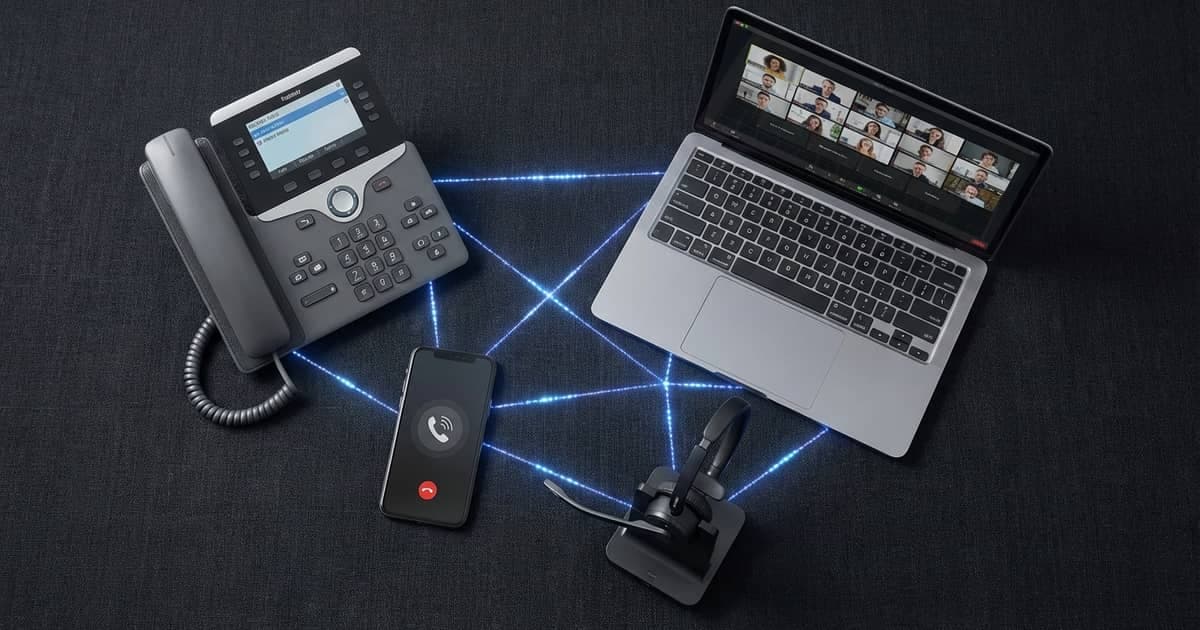
Why your phone system matters
For small businesses, the phone is still the primary way customers make contact. Whether you're a plumber getting emergency callouts, a restaurant taking bookings, or a dental practice scheduling appointments — the right phone system directly impacts your revenue.
The wrong system means missed calls, lost customers, and thousands in wasted revenue. The right one means every call is answered, every lead is captured, and your business sounds professional around the clock.
Types of small business phone systems
Traditional landline
The original business phone system. Uses copper wires and a physical handset on your desk.
Pros: Reliable, familiar, works during power outages Cons: Expensive to install, limited features, no remote access, declining support from BT (copper network switching off by 2027) Cost: £20-40/month per line + hardware
VoIP phone system for small business
Voice over Internet Protocol routes calls through your internet connection instead of copper wires. This is now the default choice for most businesses.
Pros: Cheaper calls, advanced features (call forwarding, voicemail-to-email, call recording), works from anywhere, easy to scale Cons: Depends on internet quality, needs configuration, still requires someone to answer Cost: £8-25/month per user
Popular VoIP phone systems for small business include RingCentral, 8x8, Vonage, and GoTo Connect.
Cloud phone system for small business
Cloud phone systems are VoIP systems hosted entirely in the cloud — no on-premise hardware required. The distinction between VoIP and cloud is increasingly blurred, as most modern VoIP systems are cloud-based.
Pros: No hardware costs, automatic updates, accessible from any device, easy team collaboration features Cons: Monthly subscription costs, dependent on internet, still needs someone to pick up Cost: £10-30/month per user
Virtual phone system
A virtual phone system gives you a business phone number that routes to your personal mobile or existing phones. It separates your business and personal calls without needing a second device.
Pros: Cheapest option, keeps personal number private, basic call routing Cons: Limited features, calls still go to your phone (you still need to answer), no call handling Cost: £5-15/month
AI voice agent (e.g. Orval)
An AI voice agent like Orval goes beyond traditional phone systems by actually answering calls for you. It uses conversational AI to greet callers, answer questions, book appointments, take orders, and capture leads — without a human needing to pick up.
Pros: Answers every call 24/7, books appointments, handles FAQs, multiple simultaneous calls, no staff needed Cons: Not suitable for highly emotional or complex conversations Cost: £29-99/month flat fee
Comparison table
| Feature | Landline | VoIP | Cloud | Virtual | AI Voice Agent |
|---|---|---|---|---|---|
| Monthly cost | £20-40/line | £8-25/user | £10-30/user | £5-15 | £29-99 flat |
| Answers calls for you | No | No | No | No | Yes |
| 24/7 availability | No | No | No | No | Yes |
| Book appointments | No | No | No | No | Yes |
| Multiple simultaneous calls | Extra lines needed | Yes | Yes | Limited | Unlimited |
| Remote access | No | Yes | Yes | Yes | Yes |
| Setup time | Days-weeks | Hours | Hours | Minutes | Under 5 minutes |
| Requires staff to answer | Yes | Yes | Yes | Yes | No |
The key question: who answers the phone?
Every phone system except an AI voice agent has the same fundamental limitation — someone still needs to pick up the phone. A VoIP phone system for small business gives you better call quality, cheaper rates, and more features. But if you're a sole trader under a sink, an electrician up a ladder, or a takeaway owner running the kitchen on a Friday night, those features don't matter if you can't reach the phone.
That's why many small businesses are now layering an AI voice agent on top of their existing phone system. The VoIP or cloud system handles the infrastructure — routing, number management, call recording. The AI voice agent handles the human part — answering, booking, qualifying, and following up.
Which phone system should you choose?
If you're replacing an old landline: Go with a VoIP phone system for small business. The copper network is being retired, and VoIP is cheaper with more features.
If you need team collaboration: A cloud phone system gives you the best multi-user features — shared inboxes, call transfer, presence indicators.
If you just need a business number: A virtual phone system is the cheapest way to separate business and personal calls.
If you're losing revenue to missed calls: An AI voice agent is the only option that actually answers the phone for you. It works alongside any existing phone system and costs less than a traditional telephone answering service.
The best approach: combine them
The best small business phone system in 2026 isn't a single product — it's a combination. Use VoIP or cloud for your phone infrastructure, and add an AI voice agent like Orval to handle the calls. You get the best of both worlds: modern phone features and intelligent call handling, all for under £100/month. See Orval's plans and pricing.
From the Orval team
If any of this matched what you were already thinking — see what Orval would cost for your business.
See pricing