
Blog · Guides
Virtual Receptionist UK: The Complete 2026 Guide
What a virtual receptionist UK service costs in 2026, how AI changed the market, and how to choose the right option for your business.
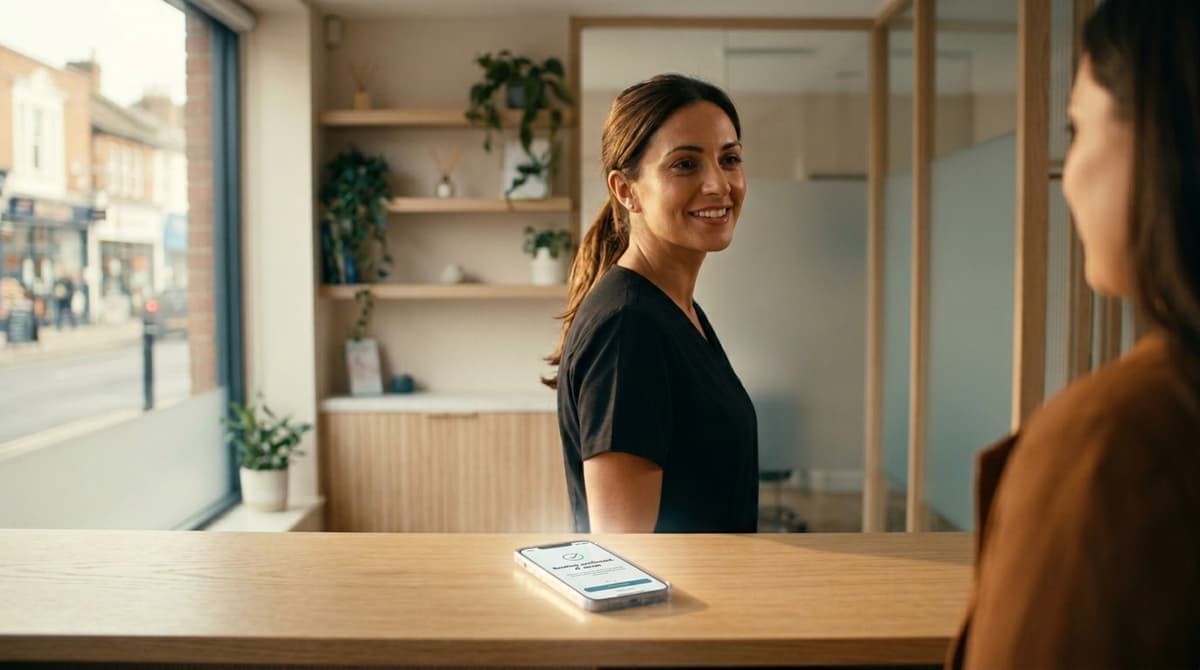
If you run a small business in the UK, you already know the problem. The phone rings while you're with a customer, on a job, or in a meeting. You can't answer. The caller hangs up. They call someone else.
A virtual receptionist solves this by answering your calls when you can't. But the market has changed dramatically in the past two years. Traditional virtual receptionist services — the kind that rely on human operators in a call centre — now compete directly with AI-powered alternatives that cost a fraction of the price and work around the clock.
This guide breaks down what a virtual receptionist actually does, what it costs in the UK in 2026, and how AI is reshaping the entire category. If you're comparing options for your business, this will help you make a clear-eyed decision.
What Does a Virtual Receptionist Actually Do?
A virtual receptionist answers your business phone calls when you can't pick up yourself. Depending on the provider, they might take messages, transfer calls, book appointments, answer frequently asked questions, or capture lead details.
The key difference from a traditional answering service is personalisation. A virtual receptionist greets callers using your business name, follows your specific instructions, and handles calls as if they were sitting in your office.
For a dental practice, that means booking and rescheduling appointments. For a plumber, it means capturing job details and urgency. For an estate agent, it means answering property enquiries and booking viewings. The common thread is that your customers get a professional response and you don't lose the call.
Traditional Virtual Receptionist Costs in the UK
If you go the traditional route — a human operator answering your calls — pricing typically works one of three ways. For a deeper breakdown of pricing models across the industry, see our call answering service cost guide.
Per-call pricing is the most common model. You pay for each call handled, usually between £1 and £2 per call. For a business receiving 100 calls a month, that's £100–£200. But the costs scale linearly. If you're a busy tradesperson or restaurant taking 300+ calls a month, you're looking at £300–£600 — and that's before any add-ons for appointment booking or out-of-hours coverage.
Per-minute pricing works similarly but charges by talk time instead. Typical rates run between 80p and £1.50 per minute. A three-minute call at £1/minute costs £3. If your average call runs longer — say a customer explaining a plumbing emergency or asking about restaurant allergens — costs climb quickly.
Monthly retainer packages bundle a set number of calls for a fixed fee. Entry-level packages typically start around £50–£100 per month for 30–50 calls. Once you exceed the bundle, overage charges apply at per-call or per-minute rates. Premium packages with 100+ calls and dedicated receptionists run £200–£400 per month.
Most traditional providers also charge extra for out-of-hours coverage (evenings, weekends, bank holidays), which is often when small businesses receive their highest-value calls.
What a Traditional Virtual Receptionist Can't Do
Human-operated services are good at the basics — answering politely, taking messages, and transferring calls. But they have structural limitations that matter for small businesses.
They don't know your business inside out. Even the best human operator is covering dozens of clients simultaneously. They can read a script, but they can't answer detailed questions about your menu, your plumbing services, your property listings, or your dental treatment options with any real depth.
They can't book appointments during the call. Most traditional services take a message and pass it to you. The actual booking still happens later, which means a back-and-forth that risks losing the customer.
They go home at night. Standard coverage is typically Monday to Friday, 8am to 6pm. Evening, weekend, and bank holiday coverage costs significantly more — if it's available at all. Yet for many businesses, those are the hours when customers are most likely to call. A buyer browsing Rightmove at 9pm. A homeowner with a burst pipe at 11pm. A patient with a toothache on Saturday morning.
They handle one call at a time. During busy periods — the Friday dinner rush for a restaurant, or Monday morning for a dental practice — calls stack up. Callers get put on hold or sent to voicemail, which defeats the purpose.
For a detailed comparison of how traditional services stack up against modern alternatives, read our guide on AI voice agents vs traditional answering services.
How AI Virtual Receptionists Work
AI virtual receptionists use conversational AI to handle phone calls through natural, spoken conversation. Not a robotic menu. Not "press 1 for sales." An actual back-and-forth dialogue where the caller explains what they need and the AI responds, asks follow-up questions, and takes action.
The technology has improved dramatically. Modern AI voice agents respond in under 100 milliseconds — faster than most humans — with natural-sounding voices that callers frequently can't distinguish from a real person.
Here's what a typical AI receptionist call looks like for a dental practice:
The patient calls. The AI answers using the practice name: "Good morning, thank you for calling Parkside Dental. How can I help you today?" The patient says they need to reschedule their Thursday cleaning. The AI checks the practice calendar, finds available slots, offers options, confirms the new time, and sends the patient an SMS confirmation — all during a single phone call. The whole interaction takes under a minute.
For a plumber, the flow is different. A homeowner calls about a leaking radiator. The AI captures their name, address, postcode, a description of the problem, and how urgent it is. It checks the plumber's calendar for the next available slot, books the job, and sends the plumber an SMS with the full details. The plumber never had to put down their tools.
AI Virtual Receptionist Costs in the UK
AI virtual receptionists use a fundamentally different pricing model. Instead of per-call or per-minute charges that scale with volume, most charge a fixed monthly fee.
Orval, for example, is an AI voice agent built specifically for UK small businesses. Pricing starts from £19.99 per month for the Starter plan, which includes up to 2 AI voice agents, 60 minutes of call handling, AI-powered call answering, appointment booking, lead capture, Outlook integration, SMS appointment confirmations, custom greetings and business hours, ready-made industry templates, and the ability to accept payments over the phone.
The Professional plan at £34.99 per month includes 180 minutes, while the Business plan at £69.99 per month includes 500 minutes — both with the same feature set. Every plan includes a UK phone number, call transcripts, and full GDPR compliance. There are no setup fees, no contracts, and you can cancel anytime.
Compare that to the traditional options: a per-call service at £1.50/call handling 150 calls a month would cost £225. A monthly retainer with 150 calls would typically run £200–£350. Orval's Professional plan covers the same volume for £34.99.
And unlike traditional services, there's no extra charge for evenings, weekends, or bank holidays. Orval works 24/7 as standard.
Side-by-Side: Traditional vs AI Virtual Receptionist
Here's how the two approaches compare across the factors that matter most to small businesses.
Availability. Traditional services typically operate Monday to Friday during business hours, with premium charges for extended coverage. AI receptionists work 24/7/365, including evenings, weekends, and bank holidays, at no extra cost.
Cost at 150 calls/month. A traditional per-call service would run roughly £150–£300 depending on the provider and call length. Orval's Professional plan handles 180 minutes for £34.99/month — a fixed, predictable cost with no overage surprises.
Business knowledge. Traditional operators work from a basic script covering multiple clients. AI receptionists like Orval are configured with your specific business information — your services, pricing, availability, FAQs, even allergen information for restaurants. They can answer detailed questions that a human operator covering 30 other businesses simply can't.
Appointment booking. Traditional services take a message for you to follow up on later. Orval books appointments directly into Outlook during the call, checks your real-time availability, and sends the customer an SMS confirmation.
Simultaneous calls. Human operators handle one call at a time, with others queuing. AI handles multiple calls simultaneously — critical during peak periods like the dinner rush for restaurants or Monday morning for dental practices.
Setup time. Traditional services typically require an onboarding period of days to weeks. Orval sets up in under 15 minutes with no coding and no technical skills. You choose from five industry templates — restaurants, estate agents, tradespeople, appointments, or customer support — customise your agent's instructions and voice, and go live.
Integration. Traditional services generate callbacks and messages. Orval integrates with Microsoft Outlook and Freshdesk out of the box, with more integrations on the way.
Which Businesses Benefit Most from an AI Virtual Receptionist?
AI virtual receptionists aren't right for every situation. If your business regularly handles deeply sensitive or emotionally complex calls — bereavement services, crisis counselling, high-value legal consultations — a human touch may still be essential.
But for the vast majority of UK small businesses, AI handles the calls that currently go unanswered. The cost of missed calls adds up fast — and these are the industries where the impact is most immediate.
Tradespeople — plumbers, electricians, builders, HVAC engineers. You're physically unable to answer the phone while working. Every missed call is a lost job, often worth £150–£350. An AI receptionist captures the details, books the job into your diary, and sends you a text summary.
Restaurants and takeaways. Phone orders during the rush, table bookings, allergen enquiries — all handled simultaneously through natural conversation. Orval tracks allergens across all 14 EU categories and confirms orders via SMS.
Dental and medical practices. Appointment booking, rescheduling, cancellations, and emergency triage — without tying up your front desk. Patients calling after hours get a professional response instead of a ringing phone.
Estate agents. Buyers browse Rightmove in the evening and call about listings. An AI receptionist answers at 9pm, provides property details, and books a viewing — capturing leads that would otherwise go to a competitor.
Solicitors, accountants, and professional services. Qualify new enquiries by capturing business type, requirements, and contact details, then routing them to the right team member with a full transcript.
Hair and beauty salons. Book appointments during your busiest periods when you're physically with a client and can't reach the phone.
IT and managed services. Create support tickets directly in Freshdesk during the call, assign priority levels, and alert on-call engineers for genuine emergencies.
Security and Compliance
Data protection matters — especially if you're handling customer information over the phone. In the UK, any virtual receptionist service should be GDPR compliant.
Orval is built GDPR-compliant from the ground up. All credentials and sensitive data are encrypted at rest using AES-256. Caller IDs are hashed by default with SHA-256 for privacy, with full logging available as an opt-in. Every admin action is tracked in a complete audit trail. Additional protections include configurable data retention policies, right-to-deletion support, row-level multi-tenant security that isolates every customer's data, and two-factor authentication for all portal access.
For professional services firms where client confidentiality is paramount, this level of protection is non-negotiable.
How to Switch to an AI Virtual Receptionist
If you're currently using a traditional answering service — or just sending callers to voicemail — switching to an AI alternative is straightforward.
With Orval, the process takes four steps and under 15 minutes. First, you provision a new UK phone number from the dashboard, which works alongside any existing landline, VoIP, cloud phone system, or mobile. Second, you configure your AI agent by choosing an industry template and customising the instructions, voice, and business hours using the AI-powered builder. Third, you go live — your agent starts answering calls immediately, with live transcripts, call summaries, and analytics visible from the dashboard. Fourth, you refine and scale by using call analytics and sentiment reporting to improve responses over time, cloning agents for new locations, and adding team members as you grow.
You keep your existing phone number. Your customers won't notice anything has changed — except that someone always picks up.
The Bottom Line
A virtual receptionist is no longer a luxury for businesses with a front desk budget. AI has made professional call handling accessible to sole traders, small teams, and growing businesses across every industry.
The numbers tell the story. A full-time receptionist costs £18,000–£25,000 per year. A traditional virtual receptionist service runs £100–£400 per month depending on volume. An AI virtual receptionist like Orval starts from £19.99 per month, works 24/7, handles multiple calls simultaneously, books appointments directly into your calendar, and never calls in sick.
If your phone is going unanswered — or you're paying more than you should for basic call handling — it's worth a look.
If you're new to the whole category, our plain-English guide to what a virtual receptionist is covers the basics. If you're ready to compare specific UK options, see our Best Virtual Receptionist UK 2026 comparison — it walks through the main options honestly with a recommendation framework. Ready to see live numbers? Our virtual receptionist pricing page lists every plan.
Try Orval free — set up in under 15 minutes, no contracts, cancel anytime.
From the Orval team
If any of this matched what you were already thinking — see what Orval would cost for your business.
See pricing