Blog · Industry
Will AI Replace Receptionists? What UK Businesses Need to Know
Will AI replace receptionists? A balanced look at what AI can and can't do, which receptionist roles are changing, and what UK small business owners and employees should actually expect.
It's one of the most common questions in UK small business conversations right now: will AI replace receptionists? Or, framed the other way, will receptionists be replaced by AI altogether? The shorter version: partly yes, partly no, and mostly it changes what receptionists actually do rather than eliminating the role.
This post cuts through the hype and the panic. Neither "AI will replace everyone by Tuesday" nor "it's just a fad" is honest about what's really happening. Below is our take on the future of receptionists, what AI virtual receptionist tools actually handle today, and what reception roles are likely to look like by the end of the decade.
The Short Answer
Some receptionist tasks will be handled by AI. Some won't. Most human receptionist roles are evolving, not disappearing.
AI is already handling a large and growing share of routine phone tasks in UK small businesses — booking appointments, answering FAQs, taking orders, capturing lead details. For these tasks, AI is faster, cheaper, and doesn't go off-duty at 5pm.
But receptionists in most UK businesses do more than answer phones. They greet walk-in visitors, manage complex human interactions, handle sensitive situations, coordinate across teams, spot things that shouldn't be automated. AI isn't going near most of that in the near term.
The honest way to think about this: if your job is exclusively "answer the phone and pass messages on", it's probably at risk. If your job is "be the intelligent front-of-house for a business that cares about its customers", you're fine — the job is just changing.
What AI Can Actually Do Today
Modern AI voice agents — the kind small businesses can actually buy in 2026 — handle a surprising range of phone tasks reliably:
- Answer calls 24/7 in your business name with a natural voice
- Book, reschedule, and cancel appointments in your calendar during the call
- Answer FAQs about pricing, services, hours, and policies
- Qualify leads with specific questions you define
- Take orders (for restaurants, takeaways, simple product sales)
- Capture detailed intake information for legal, medical, or trade businesses
- Route urgent calls via SMS or live transfer to the right person
- Send confirmations and reminders automatically
- Handle dozens of calls simultaneously — something no human can
For this tier of work, AI is better-than-human on several dimensions: always available, instant response, never tired, never inconsistent, infinitely scalable. For UK small businesses, the AI receptionist category is already a straightforward buy.
What AI Can't Do (Yet)
The limitations are real, even in 2026:
Genuine judgement calls on human situations. If a distressed customer phones about a bereavement that affects their booking, an AI can handle the booking change but cannot read the emotional context the way a human can. It can escalate, but it cannot replace the human warmth.
Walk-in reception. AI receptionists are phone-only. The human role of greeting visitors, signing them in, escorting them, and reading the body language of people in your actual office is completely unreplaced.
Complex multi-party coordination. "Can you grab Sarah from the Tuesday meeting room, check if she has 20 minutes after her 3pm, and tell the courier to wait in reception with the urgent parcel." A human receptionist does this in one breath. AI can't.
Safeguarding and nuance. When a call hints at something concerning — a vulnerable caller, a safeguarding issue, a sophisticated scam attempt — a trained human picks up on cues AI misses. This is particularly important in healthcare, legal, and social-care contexts.
Genuine relationship management. A receptionist who's known your top client for five years, remembers their dog's name, knows they prefer a cappuccino not a latte, and notices when they seem off-colour — that's not a replaceable function. It's relationship capital.
Anything where the AI being "wrong" has serious consequences. A mis-booked dental appointment is annoying. A mis-triaged legal emergency is career-ending. AI should never be used as the sole decision-maker for high-stakes calls.
Which Receptionist Roles Are Most at Risk
Ranked honestly, from most affected to least:
1. Pure telephone answering services. The traditional "call centre operator taking messages for small businesses" model is being competed head-on by AI. This is the category most at risk over the next 2–5 years. Providers are already shifting upmarket to higher-value services.
2. Out-of-hours and overflow operators. The role of "operator who picks up calls the main receptionist couldn't" is one AI does better, 24/7, at lower cost.
3. Junior in-house receptionists whose job is mostly phones. If your job title is "receptionist" and 80% of what you do is answer the phone and take messages, the phone part is automating. Most employers in this situation won't cut the role — they'll reshape it to focus on walk-in, admin, coordination, and customer experience.
4. Receptionists at businesses that don't have walk-in traffic. Trade businesses, pure online services, delivery operations — where the "receptionist" was really a phone answerer with admin duties on the side — are most likely to see the role consolidated into AI plus a small amount of admin support.
Which Receptionist Roles Are Safest
1. Healthcare and clinical receptionists. Dental practice managers, GP receptionists, clinic front-desk staff — these roles combine walk-in reception, clinical coordination, safeguarding awareness, and emotional labour. AI handles a slice of their phone work; it doesn't replace them. See our dental answering service guide for where the split typically falls.
2. Legal practice receptionists and secretaries. Solicitors' firms and barristers' chambers have reception roles that are deeply entangled with case management, client relationships, and legal-specific judgement. AI handles new-client intake well (here's how) — but the inside-the-firm work is safe.
3. Executive assistants and senior receptionists. The higher you go in the role — coordinator, office manager, executive assistant — the more the job is pure judgement, relationship, and coordination. Untouched by current AI.
4. Hospitality and high-touch brand receptionists. Luxury hotels, private members' clubs, premium retailers. The human touch is part of what you're selling; replacing it with AI defeats the product.
5. Anyone who does more than phones. If "answer the phone" is one of ten things you do, the other nine aren't automating.
What This Means for UK Small Business Owners
If you run a small business in the UK, here's how to think about it practically:
If you've been paying for an external virtual receptionist service, the AI alternative is usually 4–10× cheaper and covers 24/7. For most small businesses this is a straight upgrade. Whether to switch is mostly about timing and trust in the provider.
If you have an in-house receptionist, don't assume AI means cutting the role. The more productive move is usually: use AI for phones, free up your receptionist for higher-value work (walk-in, coordination, customer experience, social, admin). The role becomes more valuable, not less.
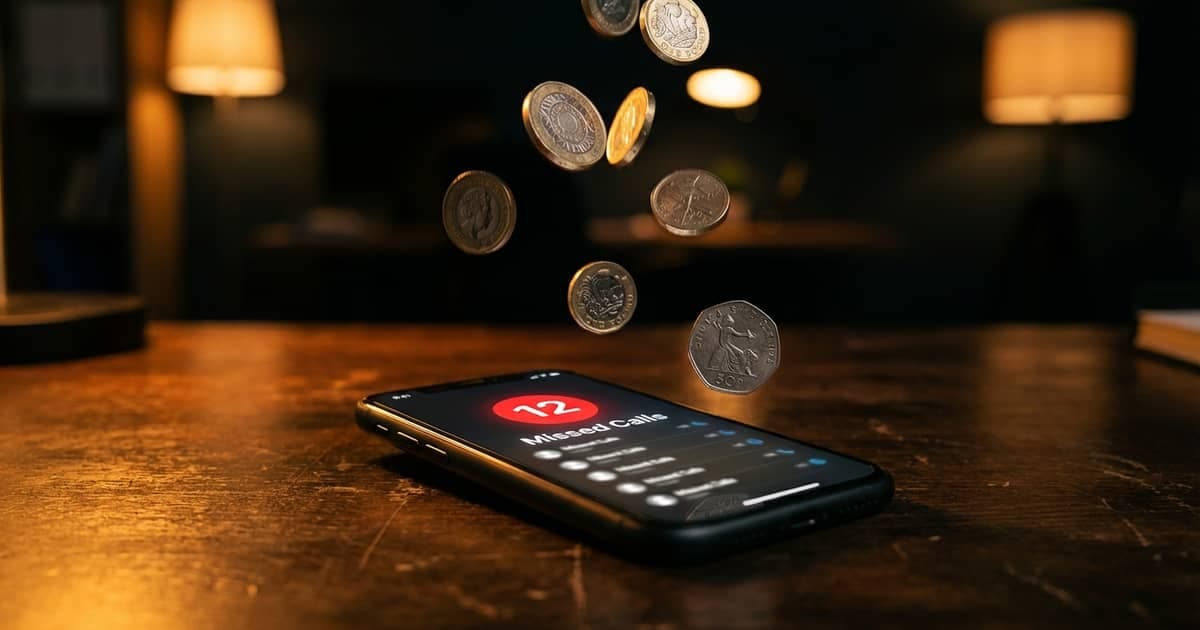
If you've been using voicemail or just missing calls, AI is an obvious win. About 80% of callers hang up on voicemail and don't leave a message. An AI receptionist captures those calls at £20–£50/month. The ROI is immediate.
What This Means for People in Receptionist Roles
A few honest thoughts:
The pure-phone-answering job is contracting. If your role is 100% phones, it's worth thinking about how to evolve it — either by taking on higher-value responsibilities or by moving into adjacent roles (admin, customer success, office management).
AI fluency is becoming a skill. Receptionists and office managers who learn to configure, tune, and manage AI receptionist systems are more valuable, not less. Someone has to set up the AI, test its scripts, spot its mistakes, and refine its handling — that someone is usually the person who used to answer the phone.
The softer skills have never been more valuable. Everything AI can't do — judgement, warmth, context, coordination, safeguarding — is what humans in reception roles should lean into. The jobs survive; the job description evolves.
Roles in "AI + human" hybrid setups are growing. Many small businesses now employ receptionists who spend part of their time on the remaining phone work and the rest on customer experience, admin, and AI supervision. These hybrid roles tend to pay better than the pure phone role they replaced.
The Realistic Timeline
- 2024–2025 (happened): Early AI voice agents became good enough for small business use. Pricing dropped below traditional call centre rates. Early adopters saved money and captured more calls.
- 2026 (now): AI receptionists are mainstream for small business. Most serious UK virtual receptionist providers now offer AI tiers. Mid-market businesses are adopting rapidly.
- 2026–2028: AI handles an increasing share of phone work across all sectors. Human receptionist roles consolidate upward into coordination, walk-in, and hybrid functions. Traditional pure-phone call centres shrink.
- 2028+: AI tackles more complex scenarios — multi-turn legal triage, clinical pre-screening, technical troubleshooting. Human roles continue to concentrate on the irreplaceable work.
Nothing about this is sudden. The technology has been gradually improving for five years. The business adoption is where the pace is picking up now.
Bottom Line
Will AI replace receptionists? Not entirely — but it is replacing a specific slice of receptionist work, and it's doing so fast. The pure-phone-answering job is contracting. The broader receptionist role — walk-in, coordination, customer experience, safeguarding, relationship — is evolving, not disappearing.
For UK small business owners: the question isn't whether AI is coming for your phones. It already has. The question is whether you'll use it to save money and capture more calls, or whether your competitors will use it first.
For people in receptionist roles: the pure-phone version of the job is fading. The richer version of the job — where you handle the human work that AI can't — is more valuable than ever.
If you want to see what an AI receptionist actually sounds like on your specific calls, Orval lets you try it free. And if you're earlier in your research, see what is an AI receptionist and is an AI receptionist worth it.
From the Orval team
If any of this matched what you were already thinking — see what Orval would cost for your business.
See pricing