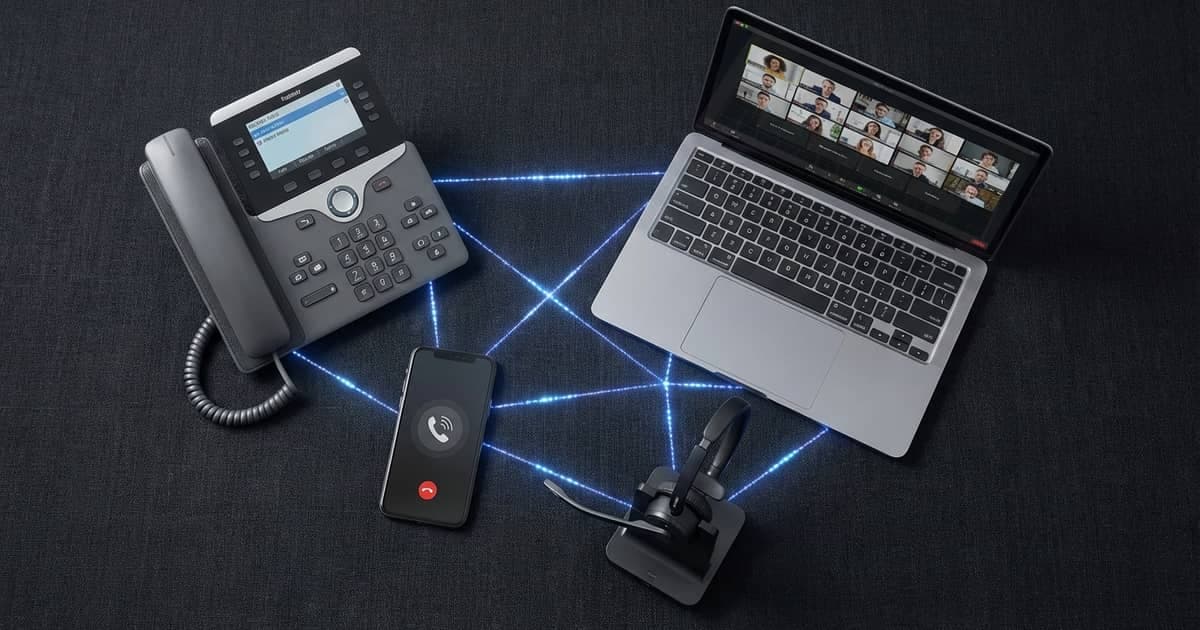
Blog · Guides
Best Virtual Receptionist for Small Business 2026
Compare the best virtual receptionist for small business in 2026: real UK pricing from £19.99/mo, AI vs human, and how to choose.
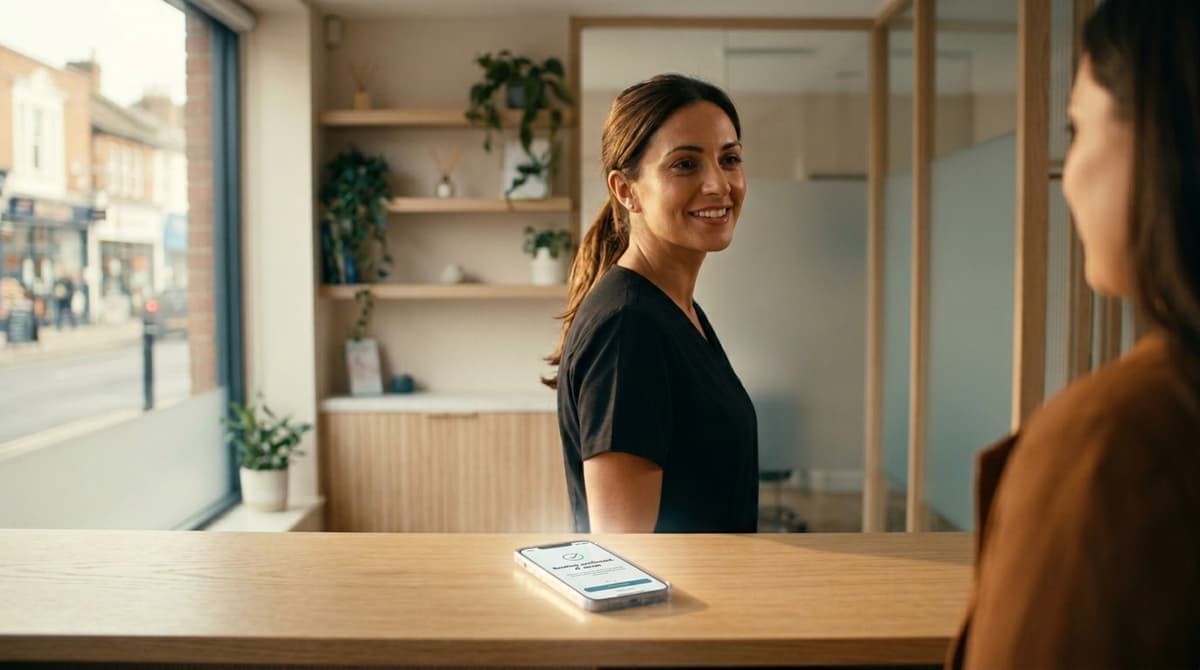
A virtual receptionist for small business is, at its simplest, someone — or something — that picks up the phone when you can't. For a one-person trade, a small clinic, or a five-desk office, that single capability changes how the business runs. Calls don't get missed. Customers don't go to a competitor. Out-of-hours enquiries become bookings instead of voicemails no one returns.
This guide answers the actual questions UK small business owners ask before signing up: what a virtual receptionist for small business actually does, what it costs in 2026, the difference between human and AI options, and how to know which is right for your situation. No fluff. Real numbers.
What a Virtual Receptionist for Small Business Actually Does
A virtual receptionist for small business answers your incoming calls in your business name when you can't pick up. The minimum job is to answer professionally, take a message, and pass it on to you. The better services do considerably more than that.
A modern virtual receptionist for small business will typically:
- Answer every call within a few rings, in your business name, with a script you control.
- Capture caller details: name, phone, what they wanted, urgency.
- Book appointments directly into your diary (Google Calendar, Outlook, Calendly, or your CRM).
- Take orders or handle simple transactional questions (price, hours, availability).
- Triage — distinguish a sales enquiry from a complaint from a genuine emergency.
- Transfer live to your mobile when something genuinely needs a human, with caller context already captured.
- Send a written summary of every call to your inbox, so nothing gets lost.
The point isn't that you save five seconds answering the phone. The point is that calls you'd otherwise miss — because you're on a job, with a customer, in a meeting, asleep, or it's Sunday — turn into booked work instead of a hang-up.
What a Virtual Receptionist for Small Business Costs in the UK in 2026
Pricing for a virtual receptionist for small business varies wildly depending on whether the service is human-operated or AI-powered.
| Service type | Typical UK monthly cost | How they bill |
|---|---|---|
| Traditional human receptionist (in-house) | £1,800–£2,500 | Salary + NI + holiday + sick |
| Outsourced human virtual receptionist | £100–£400+ | Per-minute or per-call, plus monthly fee |
| AI virtual receptionist (entry tier) | £19.99–£49 | Fixed monthly fee, no per-call charges |
| AI virtual receptionist (premium) | £79–£149 | Fixed monthly fee, more concurrent calls |
For most small businesses, the AI tier is what makes the maths work. A traditional outsourced human virtual receptionist for small business with 100 calls a month at £1.50/call costs £150/month — and that's just for daytime cover. Add 24/7, and you're easily north of £300/month. An AI virtual receptionist for small business at £19.99–£49/month covers the same volume with no per-call markup and works around the clock by default.
The break-even is unforgiving for traditional services once you cross 30–40 calls a month. Most small businesses are well past that.
Human vs AI: Which Virtual Receptionist Is Right for Small Business?
Both can work. The honest answer depends on what your calls are like and how much you take.
When a human virtual receptionist for small business still makes sense
- Very low call volumes (under ~25/month) where the per-call human service ends up cheaper than even a fixed AI fee.
- Highly emotive or sensitive call types — bereavement, safeguarding, mental-health support. AI can do these, but a trained human is often the better fit.
- Heavy reliance on human judgement — calls where the answer depends on facts no script could anticipate, and there's no good way to give the receptionist enough context.
When an AI virtual receptionist for small business is the better choice
- Anything over ~40 calls a month, where the per-call billing model on traditional services becomes painful.
- Out-of-hours / 24-7 cover — humans charge a steep premium for nights and weekends. AI just runs.
- Predictable, repeatable enquiries — bookings, quotes, opening hours, "is X in stock", "do you cover postcode Y". These are 70–90% of small-business calls and an AI handles them faster than a human.
- Spikes — Friday-night takeaway, January Self Assessment, summer holiday lettings. AI doesn't queue.
- Tight cashflow — fixed fees beat per-call surprises every time.
In 2026 the cross-over point is lower than most owners think. Once you hit 30–50 calls a month, the AI option is almost always the right call commercially.
What Makes the Best Virtual Receptionist for Small Business?
The best virtual receptionist for small business in 2026 isn't the cheapest or the one with the most features — it's the one that turns the most missed calls into booked work for the least friction. Across the UK options we've reviewed, the strongest small-business services share five traits: a fixed monthly fee with no per-call surcharge, genuine 24/7 cover (not a daytime-only base tier), direct calendar booking, written summaries of every call, and a same-week setup with no minimum contract. A virtual business receptionist that ticks all five will out-earn an in-house hire many times over, because it captures the evening, weekend and on-the-job calls a single front desk never could. If you only weigh one factor, weigh the billing model: per-call human services quietly punish your busiest months. The good news is that a cheap virtual receptionist no longer means a worse one — the affordable virtual receptionist tier now starts at £19.99/month with all five traits included.
How to Choose the Best Virtual Receptionist for Small Business
Whether you go human or AI, the same evaluation criteria apply.
- Pricing model. Fixed monthly fee with no per-minute or per-call markup is what you want. Per-call services punish your best months — exactly when you can least afford a surprise bill.
- Coverage hours. 24/7 should be the baseline, not an upcharge.
- Booking integration. If the receptionist can't put a booking into your diary, you're still doing data entry yourself.
- Setup time. A virtual receptionist for small business should be live in days, not weeks. Anyone quoting a multi-week onboarding for a five-desk business is running a heavier process than you need.
- Contracts. Month-to-month with no minimum term. Long contracts are a red flag for a service that should prove itself in the first month.
- Call recordings and summaries. You should be able to read what every caller said and what was promised, in writing, in your inbox.
- Out-of-the-box scripts for your trade. A virtual receptionist for small business should already know what a plumber, a dentist, a solicitor, an estate agent or a takeaway needs — not require you to write the script from scratch.
Sample Numbers: What a Virtual Receptionist for Small Business Saves You
Realistic figures for a UK small business handling around 100 calls a month, missing roughly 60% of them when running solo:
- Calls received per month: 100
- Calls missed without a receptionist: ~60
- Calls converted with a virtual receptionist: ~50 of those 60 (the rest are wrong number, no message, etc.)
- Average value of a converted call: £80–£250 depending on trade
- Lower-bound recovered revenue: 50 × £80 = £4,000/month
- AI virtual receptionist cost: £19.99–£49/month
Even on the conservative end, the maths comfortably runs into a 50–200x payback. That's why "is a virtual receptionist for small business worth it" is, in 2026, almost always answered yes.
For more on the underlying figures, our breakdown of how missed calls cost UK small businesses goes into detail.
The Verdict
A virtual receptionist for small business is no longer a premium service for established firms. The AI tier has dropped the price floor far enough that almost any UK small business — sole trader, family practice, two-van trade, six-table restaurant, single-branch agency — can afford the same call coverage that used to require an in-house receptionist or a £400/month outsourced contract.
The right choice in 2026 is almost always an AI virtual receptionist on a fixed monthly fee, with 24/7 coverage and direct calendar integration. The only meaningful reason not to go that way is if your call volume is genuinely tiny and your call types are genuinely highly emotive. For everyone else, the question isn't whether to get a virtual receptionist for small business — it's how soon you can switch.
Orval is built specifically as the best virtual receptionist for small business in the UK. Fixed price from £19.99/month, 24/7 coverage, calendar booking out of the box, no per-call fees, no contracts. See pricing or start free.
Still researching? Our plain-English guide to what a virtual receptionist is covers the basics, our virtual receptionist UK guide gives the wider market picture, and our Best Virtual Receptionist UK 2026 comparison walks through the specific UK options side-by-side.
Frequently Asked Questions
What does a virtual receptionist for small business actually do?
A virtual receptionist for small business answers your incoming calls in your business name when you can't pick up. The minimum job is to answer professionally, take a message and pass it on. Better services also book appointments into your calendar, capture caller details, take simple orders, triage urgency, transfer live calls with context and send written summaries to your inbox.
How much does a virtual receptionist for small business cost in the UK?
AI virtual receptionists for small business typically cost £19.99–£49 per month as a fixed fee with unlimited calls and 24/7 coverage. Traditional outsourced human virtual receptionist services cost £100–£400+ per month and usually bill per call or per minute on top of the base fee. An in-house receptionist costs £1,800–£2,500 per month once salary, NI, holiday and sick cover are included.
Is an AI virtual receptionist worth it for a sole trader?
For a sole trader taking more than ~25 calls a month, yes. AI virtual receptionists are fixed-fee with 24/7 cover included, so they cover evenings, weekends and bank holidays without the human-service surcharge. The maths typically shows a 50–200x payback once you factor in the calls that would otherwise be missed when you're on a job.
Can a virtual receptionist for small business book appointments directly into my calendar?
Yes. Modern virtual receptionist services integrate with Google Calendar, Outlook, Calendly and most major CRMs. The receptionist can offer real available slots, book the appointment during the call, and send the customer an SMS or email confirmation — so there's no manual diary entry on your end.
What's the difference between a virtual receptionist and an answering service for small business?
An answering service usually just takes a message and emails it to you. A virtual receptionist for small business does that plus appointment booking, lead qualification, simple transactional handling and calendar integration. In 2026 most modern services market themselves as virtual receptionists rather than basic answering services.
From the Orval team
If any of this matched what you were already thinking — see what Orval would cost for your business.
See pricing