Blog · Guides
AI Receptionist for Dentists: 2026 UK Practice Guide
An AI receptionist for dentists answers patient calls, books NHS and private appointments, manages cancellations, and triages out-of-hours emergencies — 24/7. Honest UK 2026 guide to what it costs, how it integrates, and when it makes sense for a dental practice.
UK dental practices have a phone problem that's specific to the profession. Call volume spikes around opening time and after lunch. Patients calling outside hours have urgent questions a voicemail won't answer. NHS and private workflows need to be handled differently. Cancellations need to be filled fast. And the front-desk team is supposed to be focused on patients in the chair, not on the phone.
An AI receptionist for dentists fixes most of that — without replacing your front desk and without the per-call costs of a traditional answering service. Here's how it works in 2026, what it costs in the UK, and when it actually makes sense for your practice.
The phone problem most UK dental practices have
Walk into any independent UK dental practice mid-morning and you'll see the same scene: a receptionist juggling check-ins, payment processing, NHS forms, and a phone that won't stop ringing. The result is usually some combination of the following:
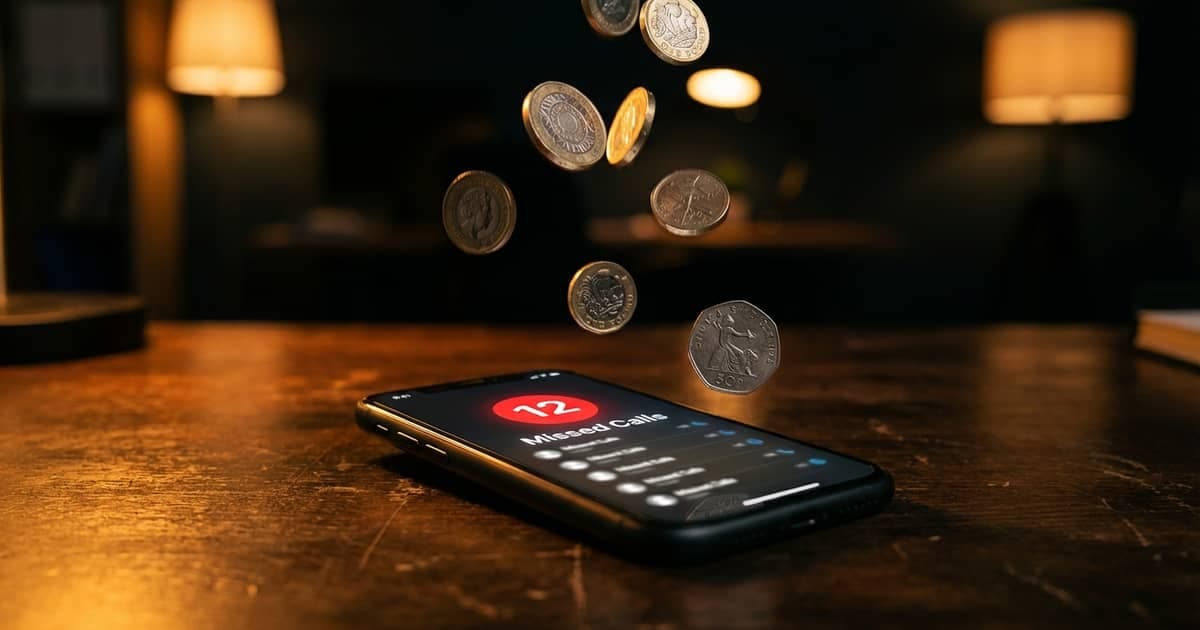
- Calls go to voicemail during patient check-in or treatment, and a meaningful percentage of those callers don't ring back — they ring the next dentist on the list. Our analysis of missed calls for small business found UK SMBs lose around £24,000/year to unanswered calls; for dental practices specifically the number tends to be higher because of the high lifetime value of new patients.
- Out-of-hours calls go nowhere, including the genuinely urgent ones (broken crown, abscess, knocked-out tooth) that should at least get triaged.
- Cancellations don't get filled fast enough because the front desk doesn't have time to ring the wait-list.
- NHS and private workflows get tangled, with NHS patients sometimes booked into private slots and vice versa.
- Multilingual patients — UK practices in cities with significant Polish, Romanian, Bengali, Mandarin, or Arabic-speaking communities — get a worse experience than English-speaking patients, because the front desk usually can't switch languages mid-call.
A traditional answering service costs £150–£400/month plus per-call fees, and operators don't know your practice. An in-house extra receptionist costs £18,000–£25,000/year. A modern AI receptionist for dentists fixes the underlying problem at a fraction of either.
What an AI receptionist actually does for a dental practice
The genuine modern bar — what a 2026 AI receptionist for dentists should handle — covers six specific dental workflows:
1. New patient intake (NHS and private)
When a new patient calls, the AI:
- Answers in your practice name within two rings
- Asks whether they're looking for NHS or private treatment
- Captures contact details, date of birth, and any treatment they're after (check-up, hygienist, urgent issue, cosmetic enquiry)
- Confirms whether they're already registered with another NHS dentist (relevant for NHS list-management)
- Books them into the appropriate slot type, or — if you're not currently taking new NHS patients — explains the waiting list and captures their details for follow-up
2. Existing patient bookings
For existing patients:
- Confirms identity (name, DOB, sometimes postcode)
- Books, reschedules, or cancels appointments directly into your practice diary
- Handles routine bookings (six-month check-up, hygienist, treatment follow-up) without a human ever needing to touch it
3. Cancellation and rebooking management
This is one of the highest-leverage features for dental practices. When a patient cancels:
- The AI captures the cancellation
- Optionally offers them an earlier slot (if your diary has one open)
- Pings the wait-list automatically with the newly-available slot
- Books the first wait-list patient who confirms back
A practice losing 5-10 cancellations a month to "couldn't fill the gap" is leaving £300-£800/month of recovered revenue on the table.
4. After-hours emergency triage
Out-of-hours calls split into three buckets:
- Genuine emergencies (significant trauma, severe pain, swelling) — AI captures details, gives basic emergency-dentist guidance, and SMS-pings a named partner if your practice has on-call cover
- Urgent next-day appointments — AI books them into the first available emergency slot
- Routine queries — AI answers what it can (opening hours, location, whether you're taking new NHS patients), books non-urgent appointments, otherwise captures the message for next-day callback
For practices not running their own out-of-hours rota, this turns "we're closed, please ring 111" into a useful triage that doesn't disturb anyone overnight.
5. Treatment-specific routing
Different treatments need different routing:
- Hygienist → straight into hygienist diary, no dentist consultation needed
- Implants/cosmetic → discovery call with the relevant clinician (different fee structure, different intake questions)
- Orthodontics / Invisalign → consultation routing
- Endodontic referrals → either booked direct or referred out, depending on practice scope
A good AI receptionist for dentists is configured around your specific treatment menu and routing rules, not generic.
6. Multilingual handling
For practices serving non-English-speaking patient populations, this is significant. A modern AI receptionist offers native-language voices in Polish, Romanian, Bengali, Mandarin, Arabic, Hindi (plus 18+ others) with no per-language premium. The same patient gets the same booking experience, in their own language.
How it integrates with your practice
The integration question is what often kills "AI receptionist for dentists" pitches in practice. Modern integrations to look for:
- Practice management software: Most UK dental practices run on Software of Excellence, Carestream R4, Dentally, or similar. The AI should write bookings into your existing diary — not create a separate calendar you'd then have to manually sync.
- Microsoft Outlook or Google Calendar for clinician personal calendars
- SMS confirmations to patients (with practice-specific rebooking links)
- Email summaries to your reception team for every call handled
- Stripe if you take payments over the phone (deposits for cosmetic consultations, treatment plans)
If a provider can't write into your existing practice diary directly, you're back to manual data entry — which removes most of the value.
What it costs in the UK in 2026
| Monthly cost | What it covers | |
|---|---|---|
| In-house extra receptionist | £1,800–£2,500 | Salary + NI + holiday + sick. Daytime only. |
| Traditional answering service | £150–£400 | Per-call billing; out-of-hours often premium. |
| AI receptionist for dental practice | £19.99–£99 | Fixed monthly fee. 24/7 included. No per-call. |
For a typical UK dental practice handling 80–150 calls a month, the maths comparing AI receptionist to traditional answering service is rarely close — often a £1,500–£3,500/year saving with better coverage. For more on the underlying numbers, see our call answering service cost guide.
The harder comparison is in-house vs AI. If your front desk is genuinely keeping up, an AI receptionist isn't replacing a person — it's augmenting them by catching the calls that come in during check-ins, treatment, and after hours. If your front desk is struggling, an AI receptionist usually pays for itself many times over by recovering booked-but-uncalled-back patients alone.
When AI receptionist for dentists makes sense — and when it doesn't
Honest framing rather than a sales pitch:
It clearly makes sense if:
- You receive 50+ calls a month and miss any meaningful share of them
- Your front desk is regularly stretched between patients-in-chair and the phone
- You want out-of-hours coverage without paying premium answering-service rates
- You serve a multilingual patient population
- You have unfilled cancellation gaps in the diary that the wait-list could cover
It might not be the right fit if:
- Your practice is genuinely low-volume and your front desk handles every call within two rings
- You're a single-clinician practice where the call patterns are too unique to script
- Your patient demographic strongly prefers human contact and the brand cost of AI handling outweighs the operational saving
For most UK independent dental practices in 2026, the balance has tipped firmly toward AI receptionist being the right answer — particularly the ones with mixed NHS/private workflows where the routing complexity actively benefits from a system that doesn't get tired or distracted.
We've covered the broader AI vs traditional receptionist question for general UK SMBs; the dental-specific case is just a stronger version of the same maths because of the high lifetime value of dental patients and the high cost of missed appointments.
How to evaluate a provider for your practice
Specifically for dental practices, the evaluation criteria that matter most:
- Native voices in the languages your patient base speaks — including the 95% English baseline plus whatever's relevant locally
- Genuine integration with your practice management system — not "we email you the booking", actually writing into the diary
- GDPR compliance and UK data residency — non-negotiable for NHS workflows
- Configurable scripts for your specific treatment menu and routing rules
- A clear human escalation path for the call types AI shouldn't handle (genuinely distressed callers, complex clinical questions)
- Fixed monthly pricing without per-call surprises — your January Self-Assessment-equivalent month for a dental practice is post-Christmas / January when everyone rings about chipped teeth
Whichever provider you pick, ask to hear their actual UK voice samples on a real phone before signing. (Orval's voice gallery plays every voice at telephone-grade fidelity — same audio your patients will hear.)
Bottom line
An AI receptionist for dentists in 2026 isn't a future-state idea — it's a present-tense option that solves the specific phone-handling problems UK dental practices have, at a fraction of the cost of either an in-house additional receptionist or a traditional answering service. For most UK independent practices, it pays for itself in the first month through recovered missed calls alone.
If you want to see how Orval handles dental practice workflows specifically — NHS/private routing, cancellation rebooking, after-hours emergency triage, multilingual patient intake — see our dedicated dental answering service page. It walks through the use cases and pricing in more detail.
From the Orval team
If any of this matched what you were already thinking — see what Orval would cost for your business.
See pricing